Types of Corrosion in the Oil and Gas Industry
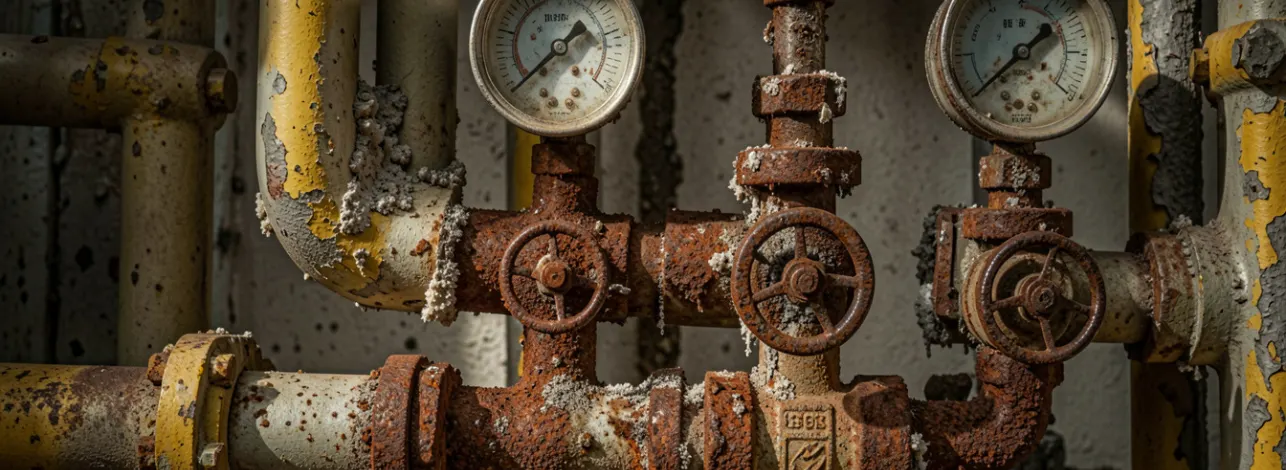
Corrosion is the progressive deterioration of metal surfaces in pipelines, oil and gas wells, drilling equipment, and storage tanks caused by chemical or electrochemical reactions with their surrounding environment. In the oil and gas sector, this material degradation costs the industry billions of dollars every year.
According to NACE International (now AMPP), the annual cost of corrosion in oil and gas production alone is estimated at $1.372 billion in the United States, covering surface pipeline facilities, downhole tubing, and capital expenditures.
TL;DR – Summary
- Corrosion in the oil and gas industry refers to the deterioration of metal components pipelines, wells, drilling equipment, and storage tanks through chemical and electrochemical reactions with their environment.
- The seven primary types are uniform corrosion (most common), pitting corrosion (most severe, responsible for over 90% of U.S. transmission pipeline corrosion failures from 1970–1984), galvanic corrosion, crevice corrosion, stress corrosion cracking (SCC), microbiologically induced corrosion (MIC), and hydrogen-induced cracking / sour corrosion.
- Key causes include carbon dioxide (CO₂), hydrogen sulfide (H₂S), dissolved oxygen, water, and microbial activity.
- Prevention strategies corrosion inhibitors, cathodic protection, protective coatings, corrosion-resistant materials and regular inspection are essential to avoid catastrophic failures and billions in annual losses.
Why Corrosion Is a Critical Threat in Oil & Gas Operations
Corrosion increases the cost of operating oil and gas assets by requiring frequent repairs and replacement of corroded components. Pipeline failures caused by corrosion can lead to leaks and spills that endanger both the environment and human health.
Prolonged exposure to harsh chemicals, high temperatures, and corrosive substances like water, carbon dioxide (CO₂), and hydrogen sulfide (H₂S) accelerates material degradation across pipelines, wells, and other equipment.
A PHMSA report confirms that corrosion remains one of the leading causes of significant pipeline incidents in the United States.
Effective corrosion management is crucial for the long-term viability and safe operation of oil and gas assets. Deploying the right combination of corrosion inhibitors, protective coatings, regular inspection, and monitoring can substantially reduce corrosion rates and extend the service life of critical infrastructure.
Main Causes of Corrosion in Oil and Gas Assets
Corrosion in oil and gas assets is caused by a combination of factors.
- Internal corrosion occurs from the inside due to the corrosive nature of the transported fluid, which can contain water, carbon dioxide, hydrogen sulfide, and other corrosive agents such as acids and bases.
- External corrosion arises from environmental factors such as soil composition, moisture, and temperature fluctuations surrounding the pipeline. Environmental conditions including oxygen levels, salinity, temperature and pH can further accelerate corrosion.
The main cause of corrosion in oil and gas assets is the presence of high concentrations of water and CO₂. When CO₂ and H₂S in crude oil and natural gas dissolve in water, they form corrosive acids that attack the inner walls of pipelines and wells. The presence of dissolved oxygen intensifies the corrosive action of these gases.
Meanwhile, microbial activity can induce corrosion through processes that generate corrosive by-products, and contact between dissimilar metals in the presence of an electrolyte triggers galvanic corrosion.
Types of Corrosion in the Oil and Gas Industry
The corrosion process manifests in several distinct forms in oil and gas operations, each with unique mechanisms, risks, and affected locations. Below is a breakdown of the seven key types, covering how they develop, where they commonly occur, and the consequences they pose for pipelines, wells, and equipment.
1. Uniform Corrosion
Uniform corrosion is the most common form of corrosion, where the metal surface uniformly loses material due to chemical or electrochemical reactions. A typical example is the rusting of steel (formation of iron oxide) when exposed to moist air. In oil and gas operations, it occurs when pipelines, storage tanks, or other metal components are evenly exposed to water, CO₂, and oxygen across their surfaces.
Because material loss is relatively even and predictable, uniform corrosion is easier to monitor through techniques like wall thickness measurement and visual inspection. However, it still contributes to costly thinning of pipeline material over time. Protective coatings and corrosion inhibitors are effective first-line defenses against this common form of material degradation.
2. Pitting Corrosion
Pitting corrosion is a highly localized form of attack that leads to the creation of small holes in the metal. It is considered the most severe type due to its rapid rate of growth and detection difficulty. According to research published by the Prognostics and Health Management Society, pitting corrosion was responsible for over 90% of corrosion failures of transmission pipelines in the U.S. between 1970 and 1984.
Pitting is often caused by weak spots in the metal’s natural passivating oxide film. In the oil and gas industry, the presence of carbon dioxide and hydrogen sulfide in crude oil and natural gas forms pits in the inner walls of pipelines and wells. Pitting corrosion can also occur in areas with sulfide impurities and poorly applied coatings. The rate of pitting due to sweet corrosion is dependent on several factors including pH values, temperature, flow conditions, and metal properties. Left unaddressed, pitting corrosion can lead to leaks, ruptures, and ultimately system failures in pipelines.
3. Galvanic Corrosion
Galvanic corrosion occurs when two dissimilar metals with different electrode potentials are in contact in the presence of an electrolyte, such as produced water. This creates an electrochemical cell where the more active (anodic) metal corrodes at an accelerated rate. A common example in oil and gas operations is a steel pipe connected to a copper fitting the steel deteriorates faster due to the galvanic couple.
Prevention strategies include using electrical isolation between dissimilar metals, selecting compatible alloys, and applying protective coatings to break the electrochemical reaction. Careful material selection during the design phase is the most effective way to prevent galvanic corrosion in pipelines and other components.
4. Crevice Corrosion
Crevice corrosion is a form of localized corrosion that occurs in confined spaces where a stagnant solution gathers such as under gaskets, deposits, or within tight spaces between flanges and valves. The stagnant fluid within the crevice becomes depleted of oxygen and concentrates chlorides and other corrosive elements, creating aggressive conditions that break down the metal’s passive oxide layer.
This type of corrosion is common in flanges, valves, and storage tanks used in oil and gas production. Proper design that eliminates crevices, combined with regular inspection and appropriate coatings, helps control crevice corrosion in corrosive environments.
5. Stress Corrosion Cracking (SCC)
Stress corrosion cracking (SCC) is a result of the combined influence of tensile stress and a corrosive environment such as chloride-rich fluids at high temperatures in pipelines and wells. SCC can cause sudden brittle failure in metal components under pressure, making it particularly dangerous in oil and gas wells and high-pressure pipelines. Controlling SCC requires careful material selection, stress relief treatments, and management of the corrosive environment.
6. Microbiologically Induced Corrosion (MIC)
Microbiologically induced corrosion (MIC) is caused by bacteria present in fluids. These microorganisms including sulfate-reducing bacteria (SRB) produce acids, sulfides, and other corrosive by-products through their metabolic activity. MIC is commonly found in stagnant areas of produced water systems, injection water lines, and pipeline sections with low flow.
MIC is characterized by slimy, gelatinous deposits on the inner walls of pipelines. Pitting corrosion is often found just beneath these deposits. Control measures include biocide treatments, regular pigging of pipelines, and monitoring microbial activity in produced fluids.
7. Hydrogen-Induced Cracking (HIC) / Sour Corrosion
Hydrogen-induced cracking occurs when hydrogen sulfide (H₂S) in sour service environments causes hydrogen atoms to be absorbed into the steel. The trapped hydrogen creates internal pressure, leading to blistering and cracking even without external stress. Sour corrosion more broadly refers to pitting and general attack caused by H₂S in natural gas and crude oil. When H₂S reacts with iron and water, it produces iron sulfide corrosion products. Selecting materials that comply with NACE MR0175/ISO 15156 standards is critical for sour service applications.
Internal vs. External Corrosion in Oil & Gas Pipelines
Corrosion inside pipelines is a critical issue affecting the longevity and safety of pipeline systems. Internal corrosion is driven by a chemical reaction between the pipeline material and the fluids it carries water, CO₂, H₂S, and microbes. External corrosion arises from environmental factors surrounding buried pipelines, including soil composition, moisture, and oxygen exposure. The table below provides a quick comparison.
| Type | Causes | Locations | Key Mitigation |
| Internal | Water, CO₂, H₂S, microbes | Pipelines, wells | Inhibitors, linings |
| External | Soil, moisture, O₂ | Buried lines, tanks | Coatings, cathodic protection |
Prevention and Mitigation Strategies
Several strategies have proven effective at controlling corrosion in the oil and gas industry:
- Cathodic Protection (CP): Cathodic protection is a technique used to control the corrosion of a metal surface by making it the cathode of an electrochemical cell. An external anode (sacrificial or impressed current) corrodes instead, shielding the protected structure. CP is widely used on buried pipelines and offshore structures.
- Corrosion Inhibitors: Corrosion inhibitors are chemicals applied to the surface of the metal to suppress the electrochemical reactions that cause corrosion. They form a thin protective film that prevents direct contact between the metal substrate and corrosive agents such as water, CO₂, and H₂S.
- Protective Coatings: Coatings act as a physical barrier that prevents direct contact between the metal and corroding agents. Options include epoxy, polyurethane, and fusion-bonded epoxy (FBE) coatings applied to pipeline interiors and exteriors.
- Corrosion-Resistant Materials: Using corrosion-resistant materials or alloys such as duplex stainless steels and nickel-based alloys can drastically reduce the occurrence of corrosion in pipelines and other components. Proper material selection during the design phase is one of the most cost-effective prevention measures.
- Regular Inspection and Maintenance: Regular inspection and maintenance are essential for early identification and addressing of corrosion problems. Techniques include visual inspection, non-destructive testing (NDT), intelligent pigging, and corrosion coupons to monitor corrosion rates over time.
The selection of the right coating or inhibitor depends on the specific conditions of the asset, and regular monitoring and maintenance is still needed regardless of the prevention method deployed. A comprehensive corrosion management program that combines multiple strategies is the most effective approach to preventing corrosion and reducing the billions in annual costs associated with pipeline failures and repairs.
Conclusion: Protect Your Assets from Corrosion
Corrosion in the oil and gas industry takes many forms from the widespread but predictable uniform corrosion to the highly dangerous pitting and stress corrosion cracking that can lead to catastrophic failures.
For high-performance corrosion inhibitors and oilfield chemicals that form protective films on metal surfaces during acidizing and downhole operations, contact Sunita Hydrocolloids. Our specialized formulations are designed to combat the corrosive environments encountered across oil and gas operations.